

Almonds and nuts: the ingredients of sustainable transition
In a sector like food, responsible for over a quarter of global greenhouse gas emissions—caused by energy-intensive processes, non-recyclable packaging, long-distance transport, high-impact animal-based ingredients, and food waste—reducing environmental impact has become urgent.
In this context, nuts stand out as a natural and sustainable solution: not only because they are nutrient-rich, but also because they serve as a lever to lighten the ecological footprint of our daily habits. Almonds and other nuts emerge as key players in more responsible diets and innovative, circular agri-food supply chains.
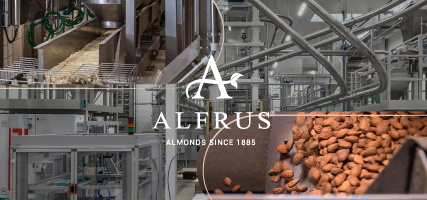
Alfrus, active in the processing and sale of almonds, integrates sustainability and innovation into an advanced industrial model. “For us, sustainability is a combination of operational choices and practical actions involving agriculture, industrial processing, and technological innovation,” emphasizes Michele Sisto, Logistics Manager at Alfrus.
The environmental contribution of almond orchards
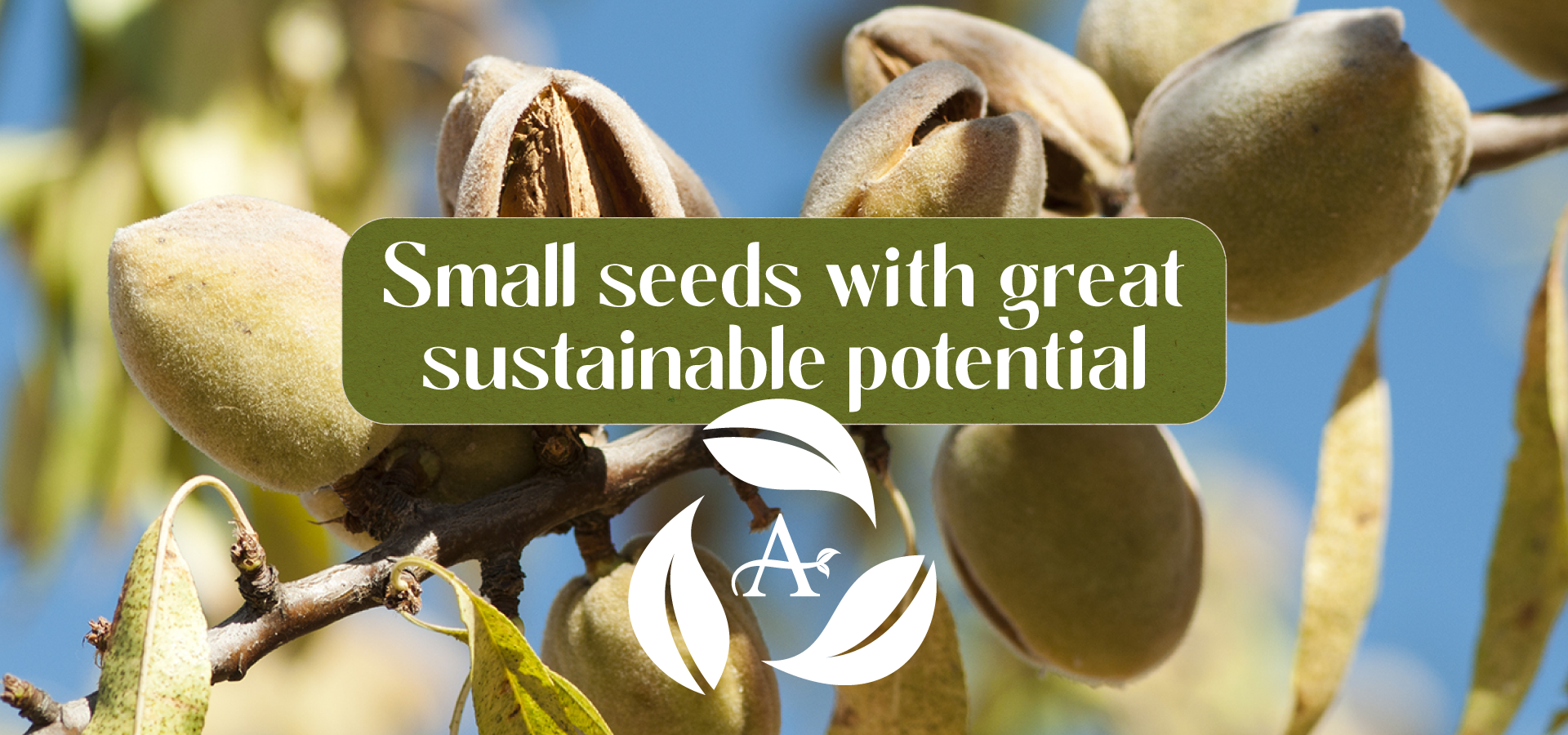
Almond orchards help reduce greenhouse gases, sequestering tons of CO₂ per hectare each year, and play a key role in biodiversity, providing habitat and nourishment for pollinators. Almond cultivation thus becomes an active part of agro-environmental systems capable of generating sustainable value throughout the product’s lifecycle.
Regenerative agriculture practices adopted today by many growers increase soil fertility, its capacity to retain water and carbon, and crop resilience. For this reason, Alfrus exclusively selects suppliers who adopt sustainable farming practices and ethical supply chains.
Water efficiency and smart water management
Agronomic innovation now allows cultivation with reduced water consumption, using technologies such as precision irrigation, climate sensors, and soil monitoring. Alfrus also employs technologies focused on water efficiency, including a system for treating and purifying wastewater for its use in local agricultural production. These initiatives have enabled the company to reduce its overall water footprint by 15%.
Zero waste: every part creates value
Almonds are a concrete example of circular economy applied to agriculture, as every part finds a new use within the supply chain—from the hull, which becomes livestock forage, to the shell, used as bedding or as a source of renewable energy through biomass conversion.
Within its facilities, Alfrus enhances processing by-products, transforming production waste into resources and thus minimizing the company’s environmental impact. Amond skins are directed into a virtuous cycle of reuse, composting, and bioenergy production, and also find applications in the cosmetics sector through collaborations with companies specialized in essential oil extraction.
Lower carbon footprint and clean energy
Compared to animal proteins, almonds have a much lighter ecological footprint: 1 kg of almonds produces less than 2 kg of CO₂, compared to 20 kg from beef. Alfrus addresses the climate footprint challenge through solar energy, continuous monitoring and reduction of the emissions of its plants, and external biogas production derived from by-products.
Traceability and transparent supply chain
Sustainability also requires transparency and verifiable information across the entire supply chain. Technologies such as blockchain allow each stage of the supply chain to be recorded, from the field to the shelf. Alfrus has integrated blockchain and digital traceability among its ongoing investment projects, aiming to ensure safety and reliability while providing a complete view of the supply chain.
Almonds for circular consumption
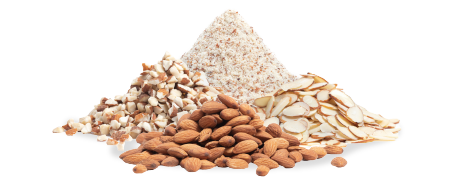
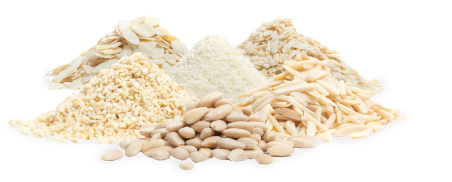
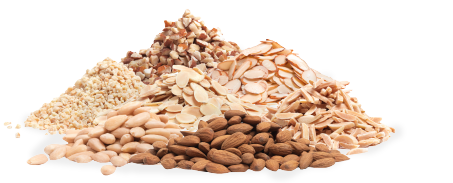
Thanks to features such as high nutritional density, long shelf life, product stability, and versatility, nuts fit perfectly into a circular consumption model. Alfrus almonds, available in various formats and treatments, allow producers and formulators to develop food solutions aligned with responsible consumption models, increasing the environmental value of the final products.
The transition to sustainable food systems is a global priority that requires the coordinated commitment of the entire supply chain. In this context, nuts—particularly almonds—demonstrate how it is possible to combine productive development, technological progress, and environmental protection.
“Working with almonds means contributing to more resilient and circular food systems, generating value not only nutritionally but also environmentally and socially,” adds Michele Sisto. For Alfrus, sustainability is not a destination but a journey of continuous improvement, built step by step, seed by seed.
25th February 2026